

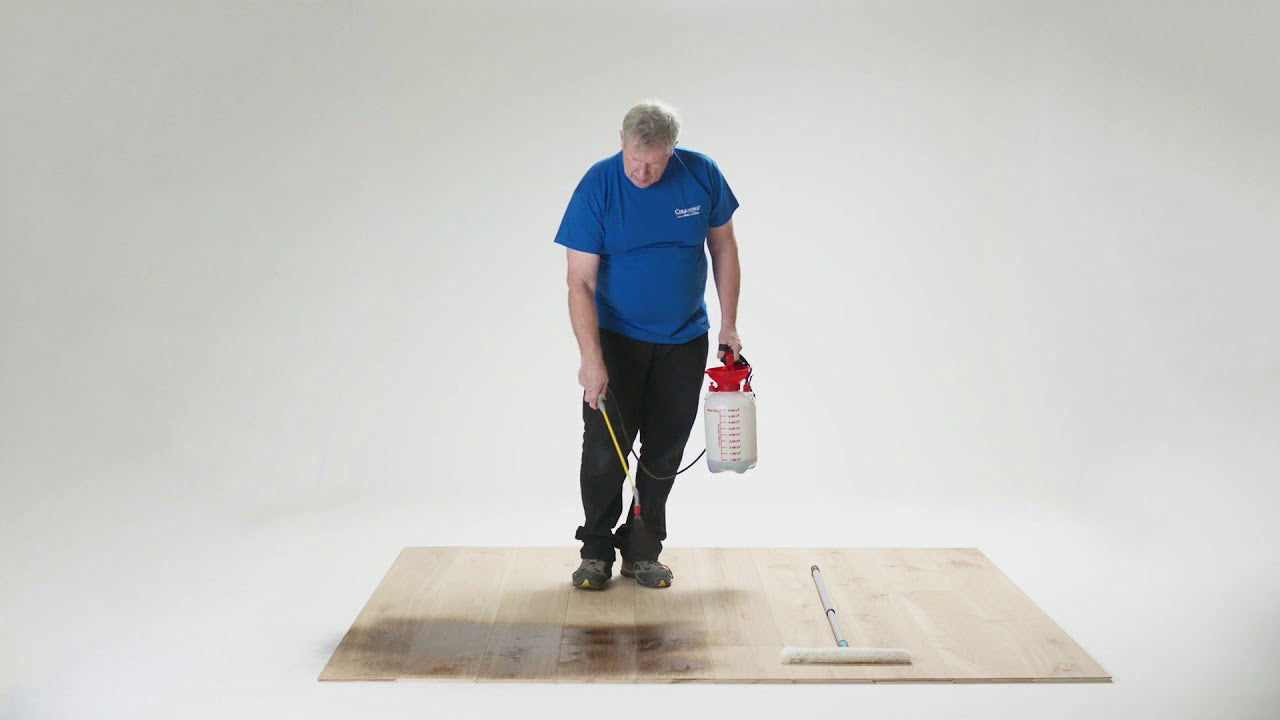
Reactive stains are not “regular stains.” Instead of simply coloring the wood by depositing pigment, reactive stains create color through a chemical reaction with what’s already inside the wood. That’s why they can look exceptionally natural and “in the grain,” and also why the same stain can look different on different woods—and even on different boards of the same species.
This guide explains what reactive stains are, what controls the final color, and how to avoid the most common pitfalls.
What is a reactive stain?
A reactive stain changes wood color through a chemical reaction with tannins (and other naturally occurring compounds) present in the wood. Think of tannins as the wood’s “reactive ingredient.”
-
More tannin = stronger reaction = deeper/more pronounced color
-
Less tannin = softer reaction = lighter/less dramatic color
-
Uneven tannin distribution = uneven color
This is why reactive stains can deliver that high-end, “made for the wood” look—because the color becomes part of the wood’s chemistry rather than sitting on top.
Why wood species matters (a lot)
Wood species differ in:
-
Tannin content
-
Porosity and grain structure
-
Natural base tone (pink/red/yellow/brown)
-
Density and absorption behavior
These variables directly affect:
-
How fast the reaction happens
-
How dark (or light) the final tone becomes
-
How uniform the color appears across boards
Practical examples of what this means
-
A species with higher tannins tends to produce richer, stronger results.
-
A species with lower tannins may look lighter or “quieter” with the same reactive stain.
-
Woods with strong natural warmth (reds/pinks/yellows) can “push” the final look warmer unless you manage it with the right system and topcoat.
The 4 biggest factors that change the final result
1) Tannin level and distribution (the “reactive fuel”)
Even within one species, tannin levels can vary:
-
heartwood vs sapwood
-
flat-sawn vs rift/quarter-sawn
-
board-to-board variation
What you’ll see: patchiness, sudden dark zones, or inconsistent tone across boards.
How to manage it: always test on offcuts from the actual floor/boards and expect some natural variation (that’s often part of the beauty).
2) Sanding and surface prep (controls uniformity)
Reactive stains are sensitive to how evenly the surface is prepared. Differences in scratch pattern and burnishing can produce different absorption and reaction intensity.
Best practice: use a consistent sanding sequence and final grit appropriate to your system, then remove dust thoroughly.
Red flags:
-
“Shiny” burnished areas from aggressive sanding
-
Inconsistent final grit across zones
-
Residual dust in grain
These can all show up as uneven color.
3) Application technique (controls lap marks)
Reactive stains tend to react quickly. If sections dry at different times or overlap inconsistently, you can see lap marks or edges.
What helps:
-
Work in manageable sections
-
Keep a consistent wet edge
-
Use a disciplined method (apply → even out → move on)
-
Plan exits and boundaries so you don’t stop mid-field
If you’re doing large surfaces, technique matters as much as product choice.
4) The finish on top (yes, it changes the color)
Topcoat choice is a major variable. The same reactive-stained floor can look:
-
warmer
-
cooler
-
darker
-
more “raw”
-
more “milky/white”
depending on the hardwax oil or finish you choose.
Rule of thumb: Select stain + finish as a pair.
If you only choose the stain, you’re only choosing half the final color.
What reactive stains are best for
Reactive stains are excellent when you want:
-
a natural, in-the-wood color effect
-
strong grain definition
-
a premium look that doesn’t feel like surface pigment
They are commonly chosen for modern matte systems because the reaction-driven base can look very authentic under a true matte hardwax oil.
When reactive stains may NOT be the right choice
Reactive stains may be less ideal if:
-
You need tight, highly uniform color matching across mixed wood batches
-
You cannot control sanding consistency and application workflow
-
You’re working with wood where the reaction is weak or unpredictable for your target color
In those cases, a system designed for more controlled color outcomes can be a better fit.
How to test reactive stain correctly (the fast checklist)
-
Test on the exact wood (same species, same batch if possible)
-
Sand the sample exactly like the real project
-
Apply reactive stain using the same tools and method
-
Apply the exact finish you plan to use
-
Evaluate after full cure time (not just “when dry”)
If you only test stain without the intended finish, your test is incomplete.
Common problems and what they usually mean
Problem: Uneven dark patches
Usually: tannin variation, uneven sanding, or inconsistent wet edge.
Problem: Lap lines / edges
Usually: sections drying at different times, overlap, or stopping mid-field.
Problem: Color looks “off” vs what you expected
Usually: wood species base tone + finish choice shifting the appearance.
Problem: One board is dramatically different
Usually: sapwood/heartwood differences or board variability.
FAQ
Does reactive stain work the same on all wood?
No. Reactive stains are wood-dependent. Species and board variation can produce different results.
Can I “force” a uniform result?
You can improve uniformity with disciplined prep and technique, but reactive stains will always reflect some natural wood variability. If perfect uniformity is the priority, consider a more controlled coloring approach.
Does the finish change the final color?
Yes—significantly. Always choose stain + finish together and test the full system.
Do I need to test?
For reactive stains, testing is not optional if you care about outcome. Test on the same wood, prepped the same way, with the same finish.
Share:
Ciranova Sustainability presentation
How to Finish Red Oak Without Pink Undertones